Character Analysis of Nora Helmer
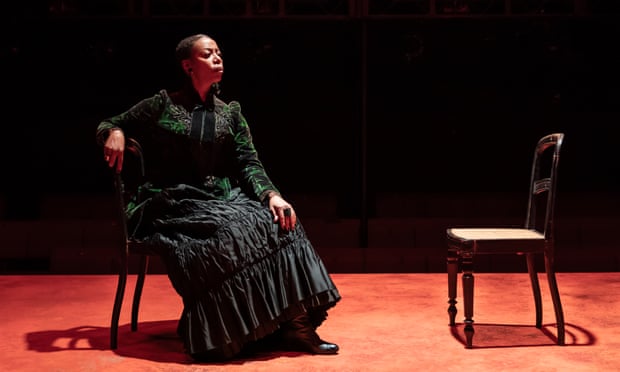 |
| Itching for a fight … Noma Dumezweni in A Doll’s House, Part 2 at the Donmar Warehouse. Photograph: Marc Brenner |
Nora Helmer returns 15 years after leaving her husband, Torvald, and their children, revealing significant developments in her character and reshaping her past relationships.
Nora's Character and Motivations:
Upon her return, Nora is no longer the seemingly naive and subservient woman who left. She has become a successful and controversial author writing books about women, their desires, and their dissatisfaction with marriage. This highlights her intellectual growth and her commitment to challenging societal norms, particularly those surrounding marriage. Her books advocate for women leaving unhappy marriages, indicating her strong belief in individual freedom and the critique of the institution of marriage as "cruel" and destructive to women's lives.
Nora's primary motivation for returning is not a desire for reconciliation but a legal predicament. She discovers that Torvald never actually filed for divorce, leaving them still legally married. This poses a significant threat because Nora has been living and working as an unmarried woman under a pseudonym, engaging in activities that would be considered illegal for a married woman without her husband's consent. She needs Torvald to file for divorce to avert potential legal trouble and public scandal. This demonstrates a practical and assertive side to her character, as she directly confronts the situation rather than retreating.
Despite her changed circumstances and independent life, Nora acknowledges the societal constraints that still exist, particularly regarding divorce laws, which favor men. Her decision to seek Torvald's cooperation, rather than initiating the divorce herself and potentially damaging his reputation, reveals a degree of lingering consideration, although her primary goal is her own freedom and security.
Throughout the play, Nora displays a strong sense of self and a refusal to compromise her beliefs. She rejects both the judge's demand to retract her writings and Emmy's plan to fabricate her death. This underscores her commitment to living authentically and challenging "bad rules". Her past experience of living a lie in her marriage has made her value honesty and self-determination above societal expectations or easy solutions.
Nora's Relationship with Anne Marie:
Nora's initial interaction with Anne Marie is marked by disbelief and the weight of their shared history. Nora sees Anne Marie as a figure who was "practically my mother" and hopes for her support. She acknowledges Anne Marie's role in raising her and her children. However, their relationship is complex. Anne Marie is initially resistant and upset by Nora's return, feeling it puts her in a difficult position with Torvald, who is her provider. Anne Marie's suggestion of Nora faking her death ("Option #3") highlights her practicality and desire to avoid further conflict.
Their exchanges reveal differing perspectives on Nora's past actions and their consequences. Anne Marie emphasizes the difficulties Torvald faced after Nora left. Despite their disagreements, a sense of shared history and a lingering bond is evident. Nora offers Anne Marie financial independence as a gesture of gratitude and an attempt to offer her a better life, though Anne Marie initially refuses. The fact that Anne Marie eventually suggests involving Emmy ("Option 3") indicates a desire to find a solution, even if their approaches differ.
Nora's Relationship with Torvald:
The central conflict of the play revolves around Nora's confrontation with Torvald. Their interaction is filled with tension, accusations, and the unearthing of past resentments. Nora directly confronts Torvald about his failure to file for divorce and the legal jeopardy it has placed her in. Their argument becomes a recounting of their past marriage from vastly different perspectives, with Torvald feeling victimized by her actions and Nora highlighting his condescending and controlling behavior.
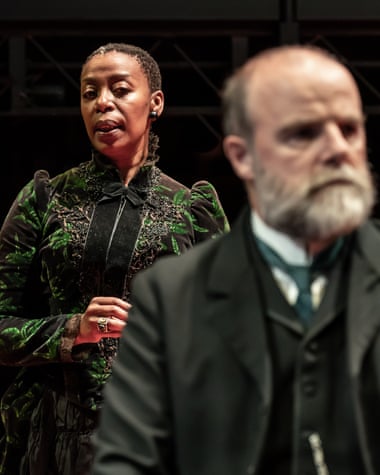 |
| Finely balanced … Noma Dumezweni and Brían F O’Byrne. Photograph: Marc Brenner |
Nora expresses regret for not leaving him sooner. Despite needing his cooperation for the divorce, she refuses to manipulate him and even considers publicly revealing his flaws if necessary. Torvald's initial reaction is defensive and self-pitying, but he eventually agrees to file for divorce, claiming he is doing it for her while simultaneously lamenting how it will ruin him.
However, in a pivotal moment, Nora rejects the divorce papers, stating, "I don't need this anymore". This signifies her complete emotional and psychological break from Torvald and the constraints of their past. She appreciates his action but realizes that her journey of self-discovery has made her independent of his legal or emotional control. Their final exchanges reveal their continued fundamental misunderstanding of each other. Nora acknowledges that they have both had other relationships since she left. Her final departure emphasizes her commitment to her newfound self and her hope for a future of greater freedom for everyone, a future Torvald cannot even envision.
Nora's Relationship with Emmy:
Nora's meeting with her daughter, Emmy, whom she hasn't seen in 15 years, is complex and revealing. Emmy's perspective is shaped by her life without Nora, and she states that things "turned out better" because of her absence. Emmy proposes a shocking "option": Nora should embrace the public belief that she is dead, and Emmy would arrange for a death certificate. Emmy's motivation is to protect her engagement to a banker who works with Torvald, as a scandal involving Nora could ruin her future.
.jpeg)
Nora is horrified by this suggestion, seeing it as a continuation of the "scheming" and "lying" that characterized her previous life. This highlights Nora's growth and her rejection of deceitful solutions, even if they offer a way out of her current predicament. Their interaction also reveals a fundamental difference in their views on marriage. Emmy desires the security and traditional roles of marriage, while Nora sees it as restrictive. Nora is disappointed that Emmy seems to be following a path similar to the one Nora once took, emphasizing her desire for Emmy and future generations to have more freedom. Nora's ultimate decision to face her problems directly, rather than relying on Emmy's deception, underscores her commitment to a different future for herself and potentially for her daughter.
Nora as an Independant woman
Based on the provided excerpts from "A Doll's House, Part 2," Nora is portrayed as a woman who has actively pursued and achieved a significant degree of independence after leaving her marriage 15 years prior. Her return is not a sign of wavering independence but rather a confrontation with the legal realities that still bind her to Torvald and threaten her hard-won autonomy.
Nora's Independent Life and Identity:
Since leaving, Nora has forged a new identity as a successful and controversial author who writes books about women, their desires, and their dissatisfaction with marriage. Her books advocate for women leaving unhappy marriages, reflecting her own experience and her belief in individual freedom. This career demonstrates her financial independence and her intellectual liberation, as she publicly challenges societal norms. She uses a pseudonym for her writing, initially perhaps for privacy, but now her public identity as a writer is at odds with her legal status as Torvald's wife.
Nora explicitly states to Anne Marie that she is "not the same person who left through that door" and is now "a very different person". She has lived independently, had lovers, and made her own decisions. Her desire upon leaving was "to be by myself" for the first time in her life, to hear her own voice free from the influence of others. This highlights a psychological and emotional independence that she actively sought and cultivated.
Challenges to Nora's Independence:
Despite her independent life, Nora's lack of a formal divorce from Torvald leaves her vulnerable. As a legally married woman, her actions – conducting business, signing contracts, having relationships – are considered illegal and fraudulent without her husband's consent. This underscores the societal and legal constraints that continue to impact women's independence, even those who actively break free from traditional roles. Her need for Torvald to file for divorce is a direct consequence of these unequal legal structures.
Nora's Assertiveness in Maintaining Independence:
Upon her return, Nora is not seeking reconciliation. Her primary goal is to secure a legal divorce to protect her independent life and career from the threats of a vengeful judge. She confronts Torvald directly about his failure to file for divorce. She also firmly rejects both Emmy's suggestion of faking her death and the judge's demand to retract her writings, demonstrating her unwillingness to compromise her principles or her hard-won autonomy, even in the face of legal peril. She declares, "I'm not going to follow these bad rules, this is my chance to change the rules".
Independence vs. Traditional Roles and Relationships:
Nora's concept of independence clashes with the traditional expectations of marriage and family. She believes marriage is "cruel" and "destroys women's lives". Her desire for Emmy is not a traditional mother-daughter relationship but a hope for a future where Emmy and other women can live more freely. She acknowledges the pain her departure caused her children but maintains that her actions were necessary for her own self-discovery and for challenging the restrictive norms of her time.
Her final refusal of the divorce papers from Torvald is a pivotal moment in understanding her independence. While she appreciates his action, she realizes that her sense of self and her independent life are no longer contingent on his legal validation. She is ready to face the world on her own terms, even if it means further struggle. Her departure at the end of the play signifies her continued commitment to this independent path, driven by a hope for a future where everyone will be "free-freer than they are now".
In conclusion, the sources depict Nora as a woman who has embraced independence in multiple facets of her life: financially through her writing career, intellectually by challenging societal norms, emotionally by prioritizing her own self-discovery, and practically by navigating the challenges of living outside the confines of marriage. While the legal system and societal expectations still pose threats to her autonomy, Nora's actions and decisions throughout the play demonstrate a resolute commitment to her independent identity and a desire to pave the way for greater freedom for other women.
Nora as Author of Controversial Books
Nora Helmer has become a successful and controversial author in the 15 years since she left Torvald. This career is a significant aspect of her independent life and is central to the conflict that brings her back.
Nora's Profession and the Nature of Her Books:
Upon her return, Anne Marie is surprised to learn that Nora has made a lot of money writing. Nora explains that women's writing is very popular and that her books are about women, their desires, what they want and don't want, and how the world treats them wrongly. One of her books is described as really controversial.
Nora reveals that her first book was inspired by her own experiences, telling the story of a woman in a seemingly good but ultimately suffocating marriage who leaves her husband to start her own life. She admits that it is "mostly about me and about how I no longer see a reason for marriage". Her writing also explicitly advocates for women who are unhappy in their marriages to refuse to honor the contract and leave, arguing that marriage is cruel and destroys women's lives.
To protect her identity, Nora writes under a pseudonym. This allows her to express her radical views on marriage and women's roles without immediately facing the repercussions of being the former Mrs. Helmer.
The Controversy and Impact of Nora's Writing:
Nora's books have had a tangible impact on her readership. She mentions that some women who read her book were so moved that they actually left their marriages. This is the direct cause of the legal predicament that forces Nora to return. One of these women was the wife of a judge who presides in the city where Nora lives, and this judge is determined to ruin Nora in retaliation. He discovered her real identity as Nora Helmer and intends to expose her as a married woman living and working as unmarried, which involves fraudulent activities like signing contracts and having lovers, all illegal for a married woman without her husband's consent.
The judge demands that Nora publicly retract everything she has said in her books, apologize for encouraging women to leave bad marriages, and state that her views were wrong and dangerous, otherwise he will expose her. Nora adamantly refuses to do this, stating she would rather die than take it all back. This highlights her strong commitment to her beliefs and the independence she has found through her writing. She declares her intention to face the people who are trying to control her and show them they cannot.
Nora's Writing in the Larger Context of Her Character and Relationships:
Nora's career as a controversial author signifies a radical transformation from the seemingly submissive and ignorant woman who left at the end of "A Doll's House." It demonstrates her intellectual growth, her newfound voice, and her commitment to challenging societal norms. Her writing is an extension of her own desire for freedom and self-discovery.
Her return and her need for a divorce from Torvald are directly linked to the consequences of her success as a writer. She needs Torvald to formalize their separation to protect her independent life and avoid legal prosecution.
When Torvald finally reads Nora's book, he is confronted with her perspective on their marriage and his behavior. He comes off "pretty badly" in the book, and Nora's descriptions of feeling terrorized and unseen by him deeply affect him. This experience contributes to his decision to finally file for divorce. However, Nora's journey of self-discovery has progressed to the point where she no longer needs the divorce from him, recognizing her independence goes beyond legal status.
Emmy, Nora's daughter, has a complex perspective on Nora's writing. While Anne Marie told her about Nora's books, Emmy admits she doesn't really read them. However, she is aware of their controversial nature and questions the positive impact of encouraging women to leave their marriages, worrying about the consequences for the women and their families. Emmy's desire for a stable, traditional marriage for herself clashes with Nora's radical views expressed in her books.
Ultimately, Nora's identity as an author of controversial books is a testament to her evolution as an independent woman. It is the driving force behind the central conflict of the play and underscores her unwavering commitment to her beliefs, even in the face of significant personal risk. Her writing is not just a profession but a form of activism and a way for her to articulate her understanding of the injustices faced by women and her vision for a more equitable future.
Desires Freedom
Nora's desire for freedom is the central driving force behind her actions and her return to the Helmer household after 15 years. This desire manifests in multiple ways:
Freedom from societal expectations and the constraints of marriage:
Nora left Torvald because she felt suffocated and had no options other than being his "little wife". She felt trapped in a marriage that she now sees as "cruel" and destructive to women's lives. Her departure was a quest "to be by myself" for the first time and to hear her own voice. She believes that marriage inherently limits freedom by binding two people together regardless of how they change or are treated. Her controversial books advocate for women leaving unhappy marriages, directly reflecting her own desire for liberation.
Financial and intellectual independence: Since leaving, Nora has achieved financial independence through her successful writing career. This allows her to live "the opposite of destitute" and make her own choices without being beholden to a husband. Her writing itself represents intellectual freedom, as she publicly challenges societal norms and expresses her radical views on marriage and women's roles. She uses a pseudonym initially, but her continued writing signifies her commitment to this intellectual freedom, even when it puts her at legal risk.
Freedom from legal constraints: Nora's primary reason for returning is to secure a legal divorce from Torvald. She discovers that they are still legally married, making her independent actions – conducting business, signing contracts, having lovers – illegal and potentially fraudulent. This highlights the fact that even though she has lived independently, the existing legal structures continue to bind her and threaten her freedom. Her insistence on Torvald filing for divorce stems from the unequal legal rights between men and women regarding divorce.
Freedom to define her own life and identity: Nora explicitly states that she is "not the same person who left through that door". She has actively constructed a new identity as a writer and an independent woman. Her refusal to retract her writings at the judge's demand, even when facing legal repercussions, demonstrates her unwavering commitment to this self-defined identity and her hard-won freedom of expression. She is no longer willing to conform to societal expectations or be dictated by others.
Hope for future freedom for all: Nora's desire for personal freedom extends to a broader vision for the future. She believes that in 20 or 30 years, marriage will be a thing of the past, and everyone will be "free-freer than they are now". Her actions are not just for her own liberation but are also driven by a desire to "change the rules" for future generations.
However, Nora's pursuit of freedom also comes with complexities and consequences:
Impact on her children: Nora acknowledges the pain her departure caused her children. While she believes her actions were necessary for her own self-discovery, her desire for freedom clashes with traditional maternal roles. Her interaction with Emmy reveals the lasting impact of her choice and the different perspectives on what constitutes a fulfilling life.
Conflict with Anne Marie: Anne Marie, who stayed to raise Nora's children, has a different perspective on Nora's choices and the consequences. She sees Nora's actions as selfish and creating problems for others. While Nora acknowledges Anne Marie's sacrifices and expresses gratitude, their differing views highlight the complexities of Nora's pursuit of freedom in relation to those she left behind.
Confrontation with Torvald: Nora's return forces a confrontation with Torvald about his failure to file for divorce and his assumptions about her life. While Torvald eventually agrees to the divorce and makes an effort to understand her, Nora ultimately realizes that her independence is no longer contingent on his legal validation. Her final departure signifies her continued commitment to her own path, independent of Torvald's actions or approval.
Ultimately, the sources portray Nora's desire for freedom as a profound and transformative force. It propelled her initial departure, shaped her independent life and career, and brought her back to confront the remaining legal and societal barriers. Her final decision not to accept the divorce papers highlights that her understanding of freedom has evolved beyond mere legal status; it is about self-determination, challenging oppressive norms, and living authentically, even if it means facing further struggles.

.jpeg)
.png)


