The novel also delves into the idea of destiny and the role it plays in our lives. Santiago's encounters with various characters who claim to know the secrets of his destiny, along with his own experiences and reflections on the subject, highlight the complex and nuanced nature of fate. I wanted to suggest that while destiny may guide us, it is ultimately up to us to make our own choices and shape our own lives.
As Santiago's journey comes to an end, he comes to realize that all the secrets of alchemy and the language of the world are within himself and that the most important thing is to follow his personal legend. I hope this message will resonate with readers, that they will come to understand that the most important things in life are hidden in our hearts, and that we must follow our dreams in order to find them.
In the end, he realises that the true treasure was his old life, his home, when one of the refugees from the tribal wars told him about his dream,
"Two years ago, right here on this spot, I had a recurrent dream, too. I dreamed that I should travel to the fields of Spain and look for a ruined church where shepherds and their sheep slept. In my dream, there was a sycamore growing out of the ruins of the sacristy, and I was told that, if I dug at the roots of the sycamore, I would find a hidden treasure. But I’m not so stupid as to cross an entire desert just because of a recurrent dream."
here we find that the treasure Santiago was looking for was in the very ruined church where he spent his night at the beginning of the novel. The only difference is Santiago believed in the dream and spent most of his life on a journey, whereas the tribal refuge was stuck in the same place. It is not about the destination but the journey that we experience and enjoy. It was that journey from which he found his love Fatema, and met characters like the Textile merchant's daughter, Gipsy woman at Tarifa, Melchizedek -- (the old man) King of Salem, the Crystal merchant (shopkeeper), The Englishman, the Alchemist, and The Coptic Monk.
Magic Realism:
Magic realism is a literary genre that blends elements of fantasy and reality, creating a surreal and dreamlike atmosphere. Magic realism can be considered one of the main themes of the novel as the story largely deals with the Omens, Soul of the World, Personal Legends, Urim and Thummim (the stones) Alchemy, etc.
The latter part of the novel (pg. no. 100-105 e-book) is an example of magic realism, a literary style in which magical or fantastical elements are seamlessly integrated into a realistic setting. Magic realism is characterized by its ability to blur the lines between the real and the surreal and to create a sense of wonder and otherworldliness. In the sequence, the boy speaks to the desert and the wind, asking for their help in finding the person he loves. The desert and the wind are personified, giving them human-like qualities and abilities, which is an example of magic realism.
Let's have look at some quotes to understand this:
"I’ll give you my sands to help the wind to blow, but, alone, I can’t do anything. You have to ask for help from the wind."
"The wind has many names. In that part of the world, it was called the sirocco, because it brought moisture from the oceans to the east. In the distant land the boy came from, they called it the levanter, because they believed that it brought with it the sands of the desert, and the screams of the Moorish wars."
This quote shows the wind being given different names and abilities depending on the location, adding to the magical and fantastical atmosphere of the story.
Additionally, the passage also describes the wind as "blowing across the world without a birthplace, and with no place to die." This quote highlights the mysterious and otherworldly nature of the wind, adding to the magic realism in the story.
Furthermore, this sequence (wind) mentions that "you can't be the wind" and "we're two very different things," but the boy argues that
"I learned the alchemist's secrets in the desert, and I know that everything is connected. We are all part of the same universe, and we all have the same potential to change and transform."
This quote highlights the idea that everything is interconnected, and that reality is not as fixed as we may think, adding to the magical realism in the story.
One can connect this novel with existential philosophy as the protagonist is in the search of treasure, namely something on which he can keep on surviving. Like the Shopkeeper (Crystal merchant) who wanted to visit Mecca once in his life but he isn't financially stable to go on a pilgrimage. "The fifth obligation of every Muslim is a pilgrimage. We are obliged, at least once in our lives, to visit the holy city of Mecca."
When he had enough money he didn't think of going to Mecca, as he said to the boy when they met,
"Well, why don’t you go to Mecca now?" asked the boy.
"Because it’s the thought of Mecca that keeps me alive..."
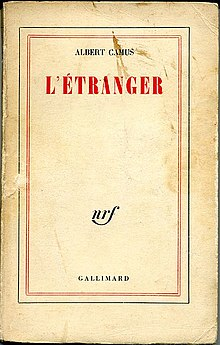
If one thinks then it can be connected with Albus Camue's 1942 novella
The Stranger (French: L'Étranger), also published in English as
The Outsider.Meursault, the main character of "The Stranger," begins on a quest for self-discovery and the search for personal purpose in life. He strives to find purpose and meaning in his life and eventually realises that life has no purpose or meaning and that individuals must construct their own.
Similarly, Santiago in The Alchemist wanders on a journey of self-discovery and personal significance in life. He's on a mission to uncover his unique mythology, as well as to comprehend the meaning of love and the voyage of self-discovery. He, too, realises that the world has no inherent worth and that individuals must make their own.